It’s that time of the month… for another guest blog 🙂 This one is brought to you by Samantha Eckrich! We met Samantha in the summer of 2017 through Liberty Church in Pennsylvania. Samantha is a college student majoring in Psychology and Music; she is preparing to continue her studies in Clinical Psychology this fall in Massachusetts. Her future is bright! Samantha has overcome so much, and has an amazing story to tell. As a writer and friend, she inspires, challenges, and encourages me; she is vulnerable, honest, and real. One thing I love about her is the example she sets in self-care. Our family cherishes the memories we have with her, and will miss her when she moves! I hope you enjoy this thought-provoking piece from Samantha. 💗
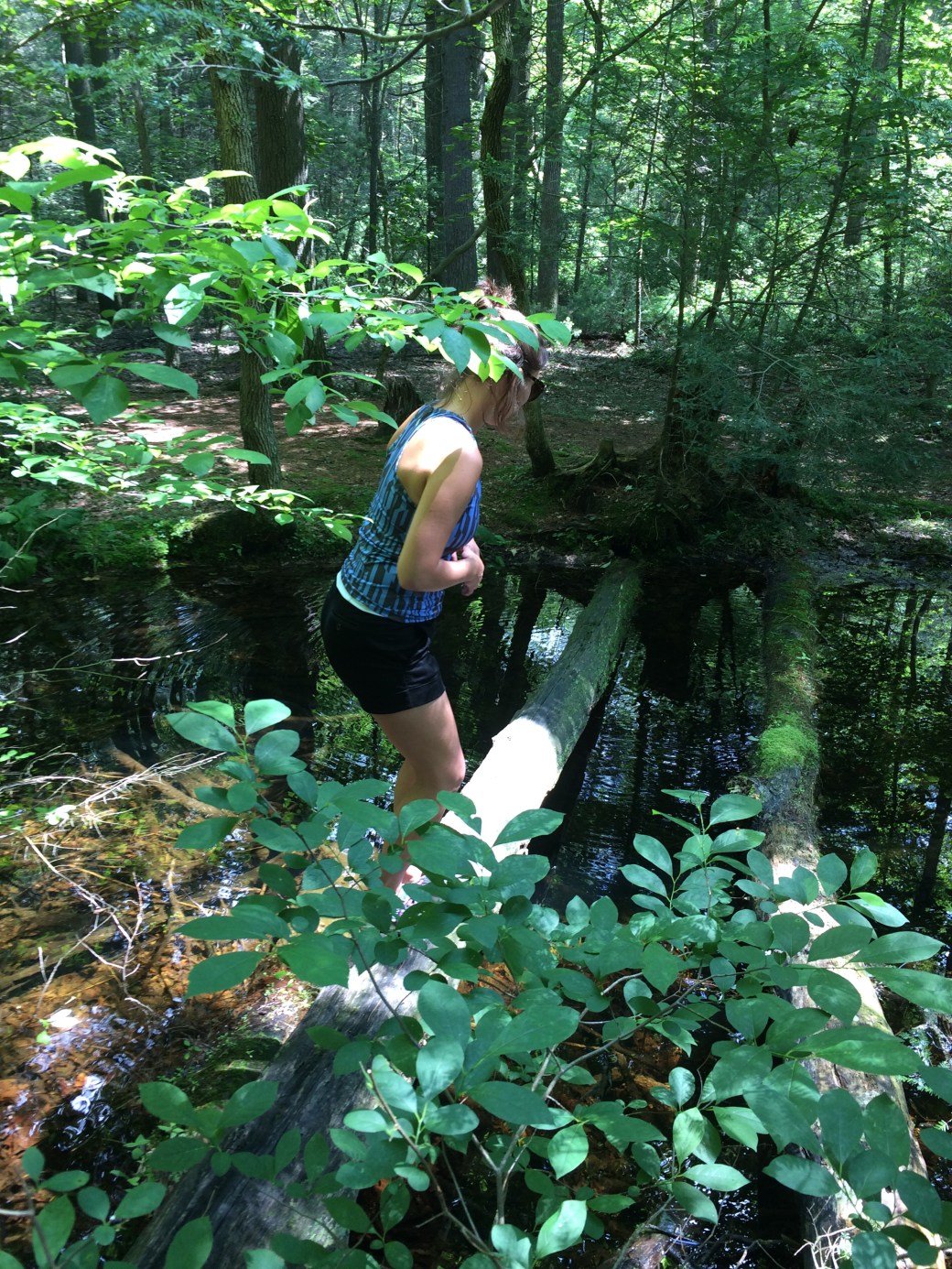
God didn’t promise to keep you from falling on your face. But He did promise to turn it into something beautiful.
“For I know the plans I have for you declares the Lord. Plans to prosper you, not to harm you; plans to give you a hope and a future.” – Jeremiah 29:11
Faith is a vulnerable, but beautiful endeavor. It is a privilege to guest-write for Megan and her blog. When she originally asked me about writing, I was sure of what I wanted to contribute. However, what you are about to read is not what I initially intended to share. It always seems that in the moments when I am most sure of myself—God pulls my heart a different direction. What I find funny is that much of my spiritual journey has been this way… unintentional… full of discord… ironic… and admittedly, full of broken, shameful moments I would rather hide.
I am learning that sin is not disgust in God’s eyes… at least, not the God who I have come to know. My young Faith is vulnerable, but I am holding pieces of my story and the lessons I have learned out to you and the world as an offering—my lessons learned about finding beauty amidst the ashes. What I want everyone to know is that scars tell stories, and that every broken fragment is something God uses to create a mended, beautiful masterpiece… sin included. But I haven’t even shared yet—so perhaps I am getting a bit ahead of myself.
I have been sexually assaulted two times alone since beginning college—one of which I processed by attempting to disappear, winding up in eating disorder treatment (once-more)—the other, processed by a bout of agnosticism at best—and total doubt about whether God existed, to be completely honest. I should mention the second assault occurred only a year ago, come April.
My race to run, as Megan writes, has not been a sprint; I would equate my race to a slow set of hurdles, and my talent as a runner is falling on my face. At least, for so long that is how I had perceived these situations. Jeremiah 29:11 has been one of my life verses, since I was fourteen; it has always served to comfort me amid uncertainty. To me, it is a reminder that Faith is rising out of fear and taking the leaps of courage in times where that is perhaps, least desirable.
The past year has been filled with trials that hurled me into a spin—what many have asked me before, I found myself pondering; this time I was much less certain of the answers. Why would a God who speaks of love, who sent His Son to die for us, and who supposedly has these plans for not harming me go so far as to “plan” tragedy within not only my life—but also the lives of others? I ask the same human questions as many: where is God in the midst of shootings? What kind of God allows people to kill others simply because they are of a different religion? I’ve gone so far in my anger to ask—what kind of God hates His children?
If this were to be my God—I want no part.
So I was re-reading a book over the course of Autumn, Pastrix by Nadia Bolz-Weber, to be specific, and it was a sharp and perhaps—“unconventional” read (in terms of thoughts surrounding traditional Christian faith)—but it is exactly what I needed. I read a passage addressing grief amid suicide, wherein someone says something to our author about “God having a plan,” and Nadia, the author, honestly retorting about “wanting to push whoever said that out a window.” The cynical line made me laugh in agreement, but that line and the lines that followed were a wake-up call.
I have come to foster the idea that perhaps the God I know was not the cause behind sexual assault. I stayed mad for what was still a long time thereafter towards my assaulters, and only recently have I come to forgive both these men, among others who have inflicted me with pain. I still had the angry questions of where was God in the storm? Why did He not intervene?
I would like to think it breaks His heart to see trials, in the same sort of way it pained Him to watch His Son be crucified for acts He did not commit, but of course on a smaller scale. Yet—even then—the love is beyond what we can grasp.
Jeremiah 29:11 is not God’s promise for pain-free living, something I have had to learn. It does not state we will never come in harm’s way, but it does give me the hope and assurance that God uses our trials and pain to cultivate a beautiful masterpiece.
I want to challenge anyone reading this to dig deep and bring to the surface whatever pains and heart-aches that are making you weary. You do not have to hold your pain inside, you do not have to battle your trials alone, and you also do not have to act okay if you are hurting. The key to Jeremiah 29:11 is not about forcing healing or forcing God to work within your life; the work of heart is made in simply allowing ourselves to be seen by the One who loves us deeply.
When we lay our pain and shame at the foot of the cross, we allow healing to seep through the smallest pieces of our lives. We allow room for the hope and future we have not only been promised, but also—that we all deserve.
~Samantha Eckrich
I know this seems to be a trend for Megan on the blog—so my spiritual playlist (which includes some throwbacks) includes:
- Mended—Matthew West
- The Breakup Song—Francesca Battistelli
- You’re Gonna Be Ok—Brian and Jenn Johnson
- Even When it Hurts—Hillsong United
- Vapor—Gungor
 My Race to Run